
This last week, I was in Toronto at the FEB National Convention. We were not permitted to send delegates as a church because National Council deferred to FEB Pacific’s suspension, however, there was much blessing that came out of his attendance. Many of you have been praying for the strange situation in which our church finds itself. Suspended from FEB Pacific because our church has advocated that female elders and preaching pastors lies beyond the boundaries of this fellowship of churches, we have been a key cog in raising awareness within the entire nation, and in putting forward a national motion that was narrowly defeated on Wednesday.
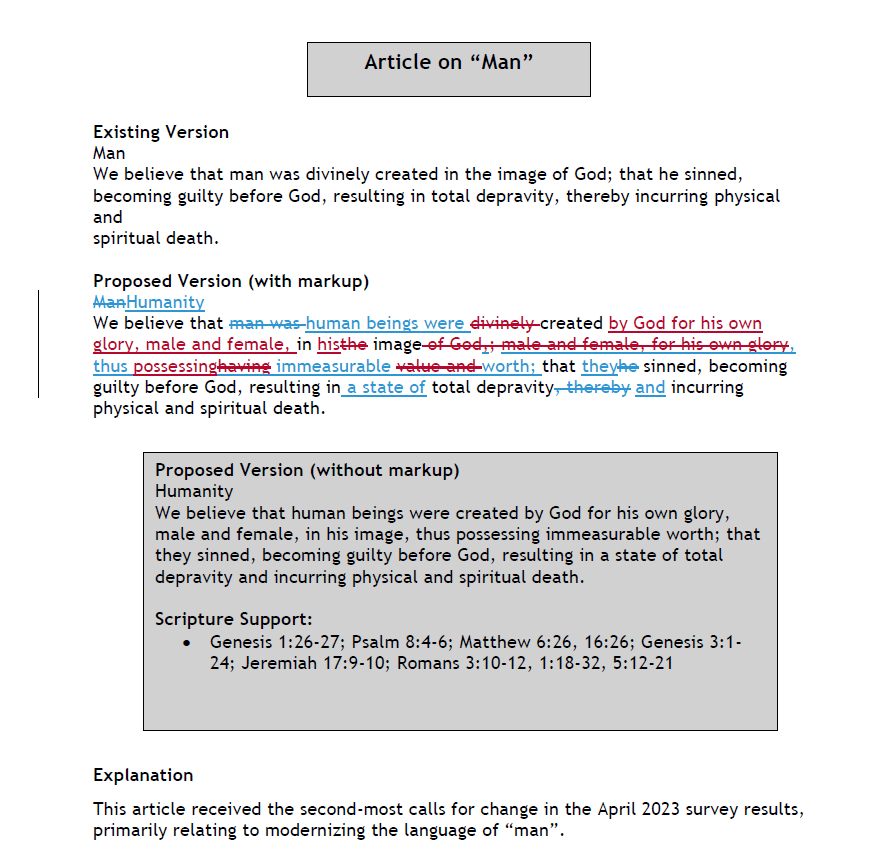
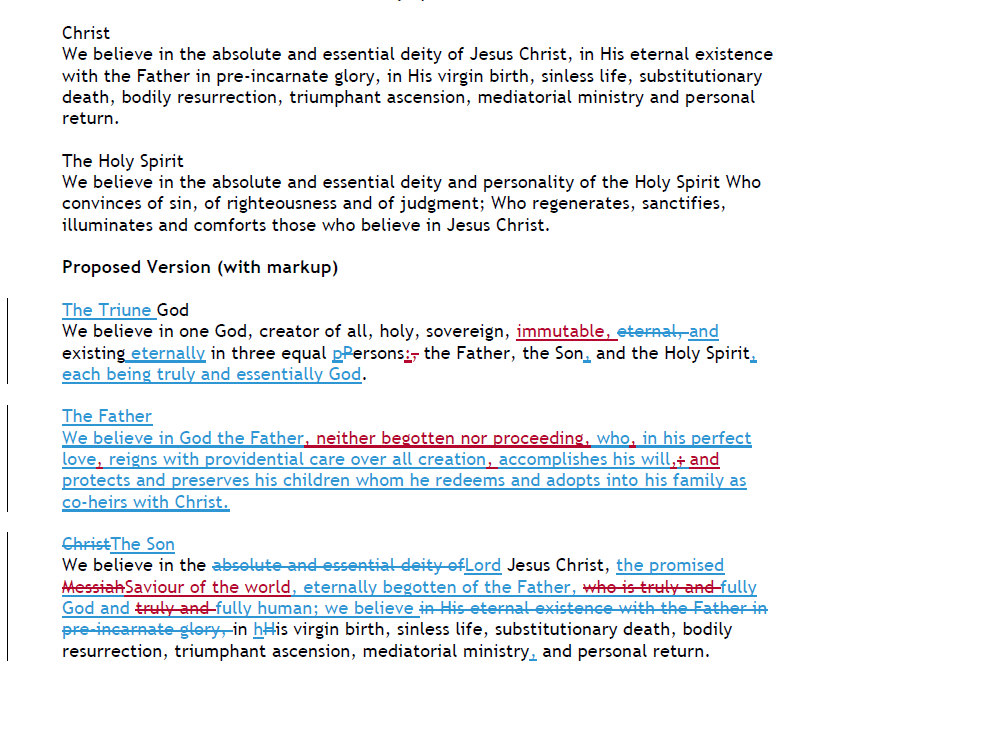
Prior to that, on Tuesday, FEB churches voted on a new Affirmation of Faith, the result of three years of work. Most of the changes that were made were good, and some excellent. I am therefore grateful for the work of those on the AoF team. There were a few missteps that were concerning–the article on “man” was changed to “humanity” and similarly, the article on Christology stated that he was fully God and fully human rather than fully God and fully man. These changes to some degree undermine the doctrine of representational (ie. federal) headship. It is crucial that in the first man all died because of his headship and that likewise, and inseparable from this, the last man died and conquered death in his headship so that all may be saved who are united to Him. I do think there is overlap between the feminism that permits women to be elders and that which removes, in our affirmation of faith, a reference to the male headship of Christ.
Another issue was one word within the doctrine on hell–the word “unregenerate.” I have written a paper on why this choice of word, although not technically wrong, entirely emphasizes the wrong thing. Over and over again, the Scriptures emphasize that people are sent to hell because they are wicked and sinful, not because God has failed to do something for them (in this case, not regenerate them).

Overall, however, all of the articles except for one passed, the vast majority having support in the high 90th percentile. The one article that did not pass was the one on the church, with many of the delegates, having been made aware of what has happened in FEB Pacific, voting against it because it failed to contain the word “male” in reference to elders, and in the latest revision the word “pastors” had also been removed. This particular article fell far short, at only 60%, of what was needed to pass. This vote, in which 40% of the delegates opposed the clear desire of leaders, was a very positive outcome which led into the positive outcome of the following day.
On Wednesday, although less than twenty-five minutes was given for deliberation and discussion from the mics (a travesty, in my opinion), our complementarian motion garnered 56.8% of the vote. Although significantly short of the 67% (two-thirds) needed to pass, this was remarkable in light of several things. These included the fact that many delegates had been instructed how to vote before knowing the particulars of what has been happening in FEB Pacific, the fact that some were just hearing about it for the first time, and the fact that leadership, though permitting the motion, quite strongly stated their preference for a longer, two-year process.
Where does this leave us? There will now be a two-year process to address this issue. Pressure has now been put upon our National leaders, who so far have had an appeasement strategy with FEB Pacific, that nothing will pass if it isn’t strongly complementarian. This is very, very positive and it ought to signal that FEB Pacific will need to leave our Fellowship if they will not reform (and short of a miracle, they will not). Pressure is likely to increase as there is a drive for a special emergency meeting called by our allies in Ontario to put forward a non-binding motion directing FEB Pacific to not suspend any further FEB Pacific churches until the two-year process is done.
In addition, we now have a national grassroots movement that is committed to complementarianism and a convictional, rather than pragmatic approach, which tends to plague our leadership. NWCC has been the sacrificial lamb in all of this–but it is often the case that a movement does not start or gain strength without some sort of injustice as a rallying cry. And if the Lord is glorified, and His word upheld, and the kingdom strengthened, because we were suspended for being divisive, we ought to rejoice.
To see Tim Stephen’s article on some of the contrary opinions shared at the convention, see here: https://www.fairviewbaptistchurch.ca/fellowship-national-conference-votes-down-complementarian-policy/